Custom Industrial Dehumidifiers Manufacturer - Delivered in 15 days.

Are ultrasonic humidifiers safe for cleanrooms and electronics manufacturing?
Yes, with conditions: feed treated water below 50 ppm TDS, give the mist at least 2.5 m to evaporate before it reaches product, and keep the machine serviceable from outside the clean zone. Skip those and ultrasonic atomisation puts mineral aerosol and microorganisms into the room, which is why many ISO classified areas specify steam instead.
The three risks that decide the answer

Particles. A droplet of treated water leaves nothing behind; a droplet of mains water leaves the minerals. That is why cleanroom humidification guidance is blunt about it: ultrasonic and high-pressure nozzle systems can disturb the room particle class by producing water droplet aerosols, and steam — which completes the phase change before it enters the room — is the preferred solution in many classified areas. Ultrasonic is not excluded, but it has to be justified.
Microorganisms. Ultrasonic is a cold process with no boiling step, so anything living in the tank is atomised with the water. Standing water between 20 and 45 °C is the classic colonisation window. Treated feed plus UV or biocide dosing, a documented disinfection routine and short standing times are what make the difference, and they are quality-system items rather than hardware options.
Condensation. The mist has to disappear before it reaches a filter, a coil, a sensor or cold product. That is a design calculation — air temperature, face velocity, duct dimensions and the distance to the next obstruction — not a commissioning afterthought. A system that reaches the setpoint while wetting a duct or loading a HEPA filter is not correctly commissioned.
The counterweight is energy and control. Against steam, ultrasonic is widely quoted at around 90 percent less energy, and against evaporative media at roughly ±2% RH control accuracy rather than ±5–10%. Both matter in a room running 240–600 air changes per hour, where the supply air dries the space faster than most plant can respond.
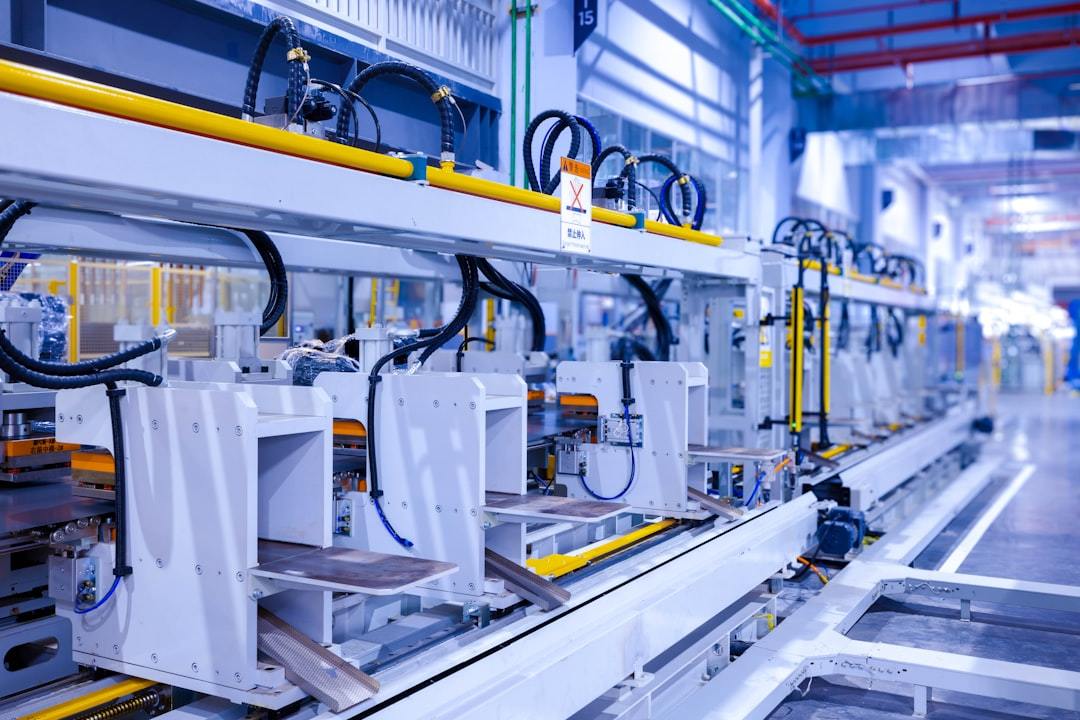

Representative project configuration
An assembly hall needed 45 ±5% RH for static control, with the humidity plant having to hold the band without adding particles to a room served by terminal HEPA filtration. The ultrasonic option was chosen on energy grounds and then engineered around its risks.
Units were mounted above the suspended ceiling and discharged through a short ducted run with at least 2.5 m of clear evaporation distance to the nearest bench, with sensors sited in representative room air away from the injection plume. Particle counts were logged through commissioning and compared against the pre-installation baseline. The limitation worth recording: this works because the water plant was funded in the original scope and the room is only ISO 8. A tighter class with no ducted distribution would most likely be specified as steam.
Humidity and electrostatic risk, band by band
| Relative humidity | Typical charge on personnel | ESD risk | Comment |
|---|---|---|---|
| Below 20% | Up to 20,000 V | Extreme | Arctic winter and some dry process areas |
| 20–30% | 5,000–20,000 V | High | Offices and fabs without ESD controls |
| 30–50% | 1,000–5,000 V | Moderate | Typical controlled environment; controls still required |
| 50–65% | Below 500 V | Low, but condensation risk | Watch cold surfaces and chilled process water |
Read the bands as guidance rather than a mandate: IEC 61340-5-1 does not fix a humidity value, it requires the ESD programme to address the actual conditions, and semiconductor fabs often run below 40% RH for process reasons with enhanced controls. ISO 14644-2 monitoring practice is generally 40–60% RH at ±5% and 20–22 °C at ±1 °C, with pressure differential alarmed above roughly 5–15 Pa. East Dehumidifier will say plainly when steam is the safer specification for your class, because the cheapest humidifier is not the one that costs the least to buy.
Related questions
Specifying for a classified area?
Send your ISO class, target RH band and water analysis. East Dehumidifier will say plainly whether ultrasonic meets your class or whether steam is the safer specification.