Custom Industrial Dehumidifiers Manufacturer - Delivered in 15 days.

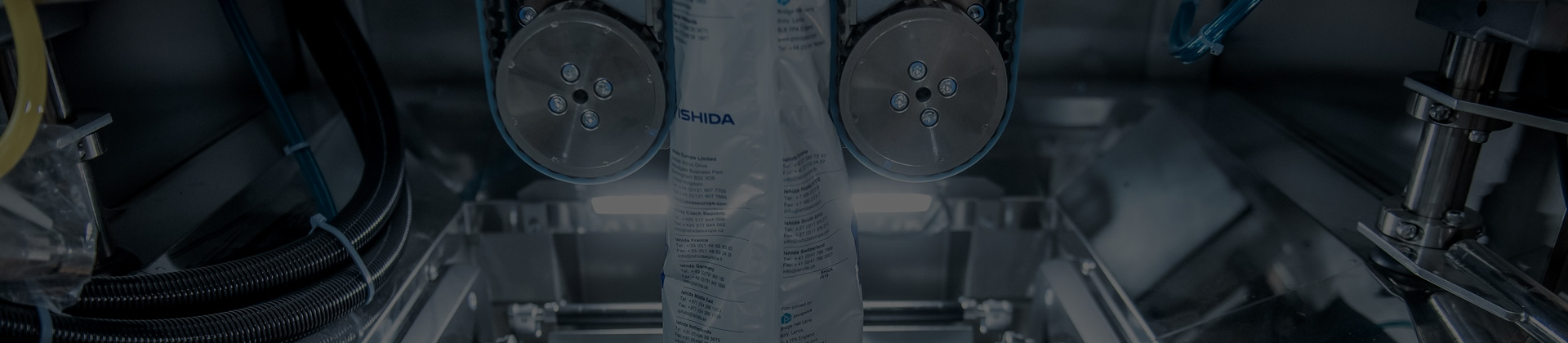
Granular Food Packaging Solutions
- Application Scenarios -
Engineered for Every Place Humidity Does Damage.
Pharma & GMP Cleanrooms
Maintain 45 ± 5% RH in API and tablet production. Ducted desiccant systems pass regulatory audits with stable, logged humidity.
Storage & Distribution
Stop carton softening, rust and mold across 20,000 m² facilities. BMS-integrated arrays cut product damage up to 30%.
Lithium-Battery Dry Rooms
Prevent condensation on electrode coating and cell assembly. Ultra-low dew point protects yield in gigafactory dry rooms.
Swimming Pools & Spas
Corrosion-resistant units kill fog, protect structure and cut energy up to 50% versus ventilation-only comfort control.
Basements & Underground
Eliminate damp, musty air and condensation in cellars, plant rooms, archives and civil-defense spaces — protect assets below grade.
Food & Beverage
Control humidity in drying, packaging and cold storage. Prevent caking, clumping and mold across the production line.
Garment & Textile
Keep mills and storage dry to stop mildew on fabric and leather. Stable RH protects finished goods and raw stock alike.
Plus: Labs · Archives · Marine
From museums and archives to ship cabins and offshore platforms — corrosion-proof and low-temperature variants on request.
Not Listed? We Spec It.
Tell us your space, process temperature and target RH. Our engineers return a sized solution — free, within 24 hours.
How Can We Support Your Success?
Unsure how to choose the right packaging production machinery? Contact our experts, and we will tailor a solution for your factory.
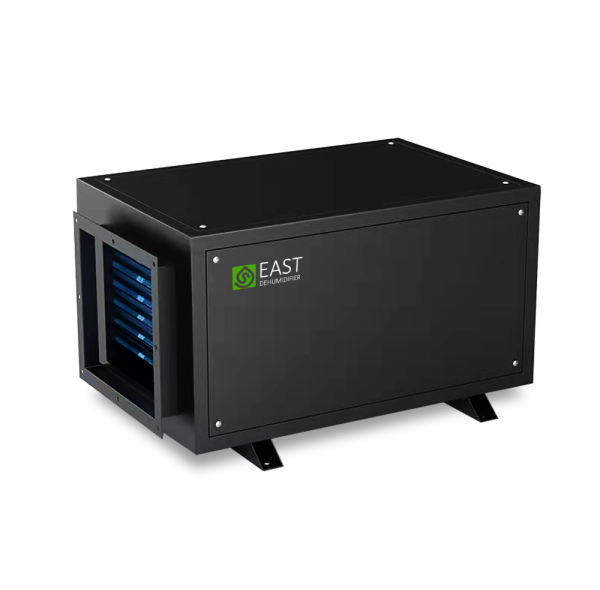
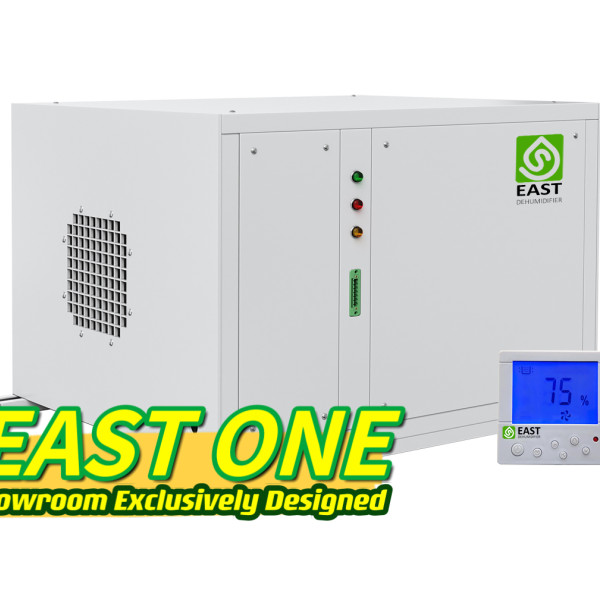
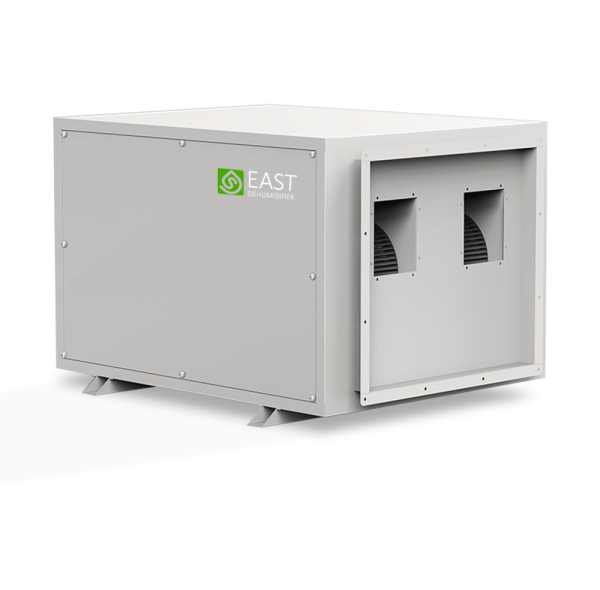
Related Dehumidifierfor different solutions
FAQs
- Can a single unit desiccant dehumidifier run outdoors or in harsh environments?Yes, if the cabinet is built for it. Outdoor-rated desiccant units use an IP54 weatherproof housing and are catalogued from minus 18 to plus 40 degrees Celsius ambient, with desiccant technology itself working from about minus 10 to plus 50. A standard indoor cabinet is not rain-proof, and salty or dusty air still needs the right filtration and coating.
- What power supply does a hand push industrial dehumidifier require?Small hand push units run on single-phase 220 to 240 V at 50 Hz, drawing roughly 1 to 4 A. Above about 150 litres per day you need three-phase 380 to 415 V, where a 192 litre machine draws 6.5 A at 3.5 kW and a 1,200 litre machine draws 38 A. Voltage, frequency and plug type are fixed per destination before the machine is built.
- What is the noise level of a ceiling mounted industrial dehumidifier?Small ceiling units of 20 to 130 litres per day typically measure 45 to 55 dB(A) at 1 m; three-phase machines from 168 litres per day upward run 68 to 75 dB(A), and the largest 720 litre frames sit at 75 dB(A). Mid-size ducted models are published at 49 to 50 dB(A) measured at 3 m. Resilient hangers and flexible duct connections take the structure-borne part out.
- Are ultrasonic humidifiers safe for cleanrooms and electronics manufacturing?Yes, with conditions: feed treated water below 50 ppm TDS, give the mist at least 2.5 m to evaporate before it reaches product, and keep the machine serviceable from outside the clean zone. Skip those and ultrasonic atomisation puts mineral aerosol and microorganisms into the room, which is why many ISO classified areas specify steam instead.
- How do you maintain and clean an industrial ultrasonic humidifier?Clean the tank weekly, descale the transducers monthly with a citric acid solution, replace or regenerate the demineralisation cartridge every 200 to 600 operating hours, and plan on new transducers every 8,000 to 12,000 hours. Skipping the schedule is expensive: mineral scale cuts mist output by 30 to 50 percent long before anything visibly breaks.
Request a Factory Quote
- *Name
- *Phone
- *Title
- *Content