Custom Industrial Dehumidifiers Manufacturer - Delivered in 15 days.

Why do lithium battery dry rooms require desiccant rotor dehumidifiers?
Lithium cells are chemically incompatible with water. Lithium reacts with moisture to form lithium hydroxide and hydrogen, and the electrolyte salt reacts to form hydrofluoric acid, so dry rooms are held at a −40 °C dew point or lower, around 1% RH at 22 °C. Only adsorption reaches that level; a refrigerant coil stops near +5 °C dew point and ices below it.
What moisture does to a cell
Electrode coating
Electrode materials are hygroscopic. Water absorbed during slurry coating creates micro-defects and weakens adhesion, which shows up later as pinholes and delamination at calendering.
Cell assembly
Any humidity exposure between electrode cutting and electrolyte filling stays inside the cell and later generates gas, causing swelling and capacity fade.
Electrolyte filling
The common electrolyte salt reacts with trace water to produce hydrofluoric acid, which corrodes internal components. Filling rooms are often held near −50 °C dew point.
Formation and ageing
Residual moisture makes formation curves unstable and widens the yield distribution, which customers see as higher variation and lower first-pass rate.
Why no other technology can do it
A condensing dehumidifier removes water by cooling air below its dew point. Once the coil approaches 0 °C the condensate freezes, so the practical floor sits around +5 °C dew point. A battery dry room needs 45 degrees or more below that. Adsorption has no freezing limit, so the rotor simply keeps drying as the air gets drier.
The load side matters just as much as the machine. Operators add roughly 50–80 grams of moisture per hour each through breathing and skin, every door cycle dumps a slug of ambient air into the room, and modern high-throughput lines run 20–30 air changes per hour. For the deepest duties two rotors run in series with intercooling, the first taking the air to about −20 °C and the second to −50 °C or beyond.
The cost nobody budgets for
Ultra-low dew points are expensive. Regeneration heat dominates consumption, so heat recovery on the regeneration exhaust and tight envelope sealing are not optional extras; they are what makes the running cost survivable. Specifying a deeper dew point than the tightest process step needs is the most common source of wasted capital and power.

Representative project configuration
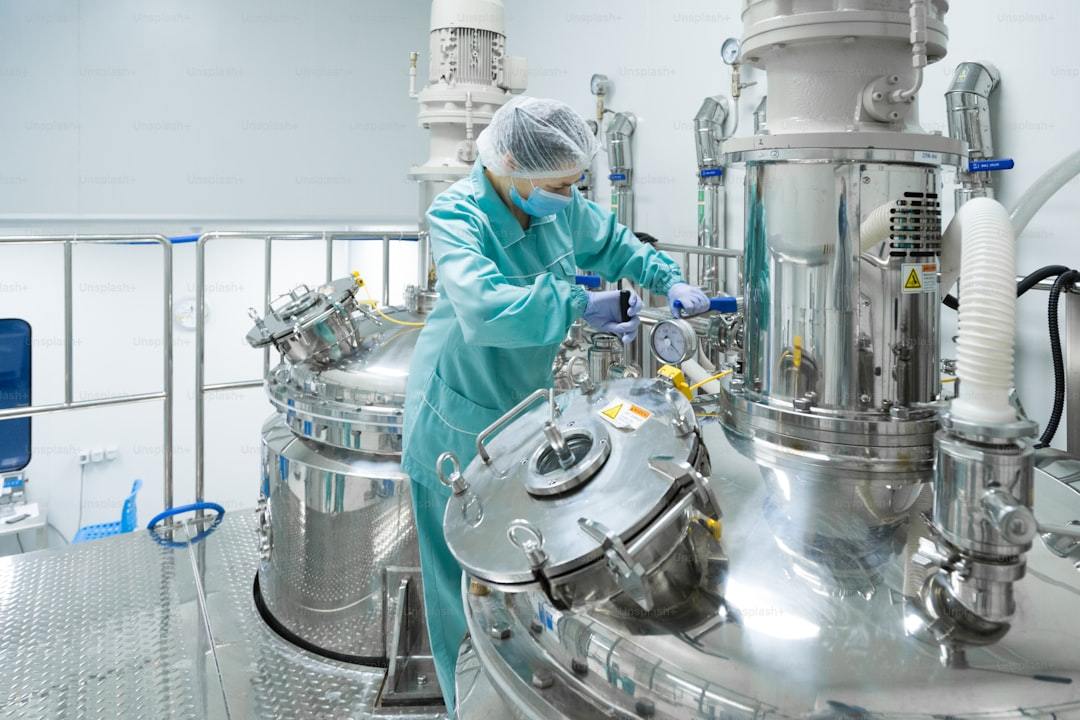
A pilot line was scrapping cells from gas generation during formation. Investigation traced the cause to dew-point drift during shift changeover, when the airlock cycled repeatedly.
The equipment alone did not fix it; an airlock and a documented leakage budget did. Occupancy and door discipline were written into the operating procedure. Results are configuration-based and depend heavily on envelope quality.
Target conditions by process step
| Process step | Typical dew point | Temperature | Sensitivity |
|---|---|---|---|
| Electrode mixing and coating | −30 to −40 °C | 20–25 °C | Coating defects, poor adhesion |
| Electrode storage and handling | −40 °C | 20–25 °C | Moisture uptake before assembly |
| Cell assembly and stacking | −40 °C | 20–25 °C | Gas generation, swelling |
| Electrolyte filling | −45 to −50 °C | 20–25 °C | HF formation, corrosion |
| Formation and ageing | −40 °C | 20–25 °C | Capacity fade, yield spread |
Design note: size from the tightest step, then add margin for people and doors rather than for the room volume alone. East Dehumidifier sizes battery dry rooms from occupancy, door-cycle rate and leakage budget as well as airflow, and states the envelope quality the guarantee assumes.
Related questions
Planning a battery dry room?
Send room volume, target dew point, occupancy, door-cycle rate and air-change requirement. East Dehumidifier will return a staged rotor configuration and leakage budget.