Custom Industrial Dehumidifiers Manufacturer - Delivered in 15 days.

How do I size a single unit desiccant dehumidifier for a dry room?
Size a dry room from moisture load, not floor area. Multiply room volume by 20 to 50 air changes per hour, add 50 to 80 grams per hour for each operator, add door and envelope leakage, then apply a 10 to 25 percent margin. Single rotor units cover 300 to 3,000 cubic metres per hour; below minus 40 degrees Celsius dew point you need two stages.
The four loads that decide the size
Air change requirement
Dry rooms for battery work are specified at 20–30 air changes per hour for standard lithium-ion lines and 30–50 for advanced chemistries. Multiply the figure by room volume to get process airflow. A 1,200 m³ room at 25 ACH needs 30,000 m³/h of circulated dry air, which already exceeds a single rotor unit and points to a multi-unit or two-stage arrangement.
People
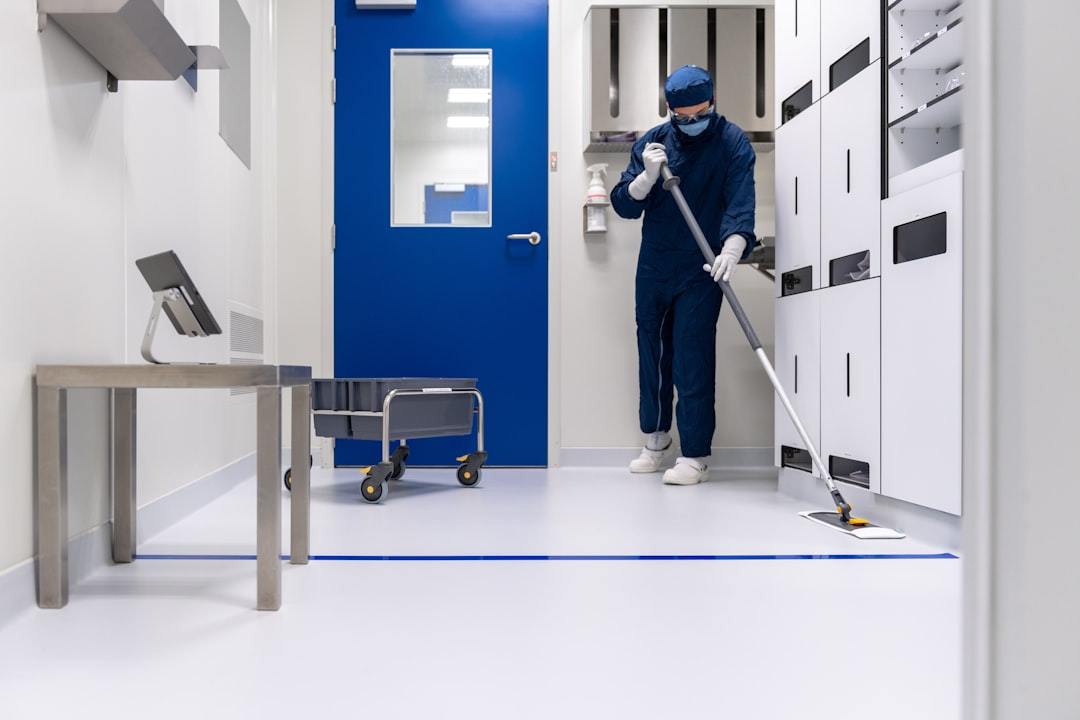
Each operator releases roughly 50–80 grams of moisture per hour through respiration and skin. Eight people in a small dry room is 0.4–0.6 kg/h of load that never stops during a shift, and it is the load most often left out of the calculation. Airlocks and gowning rooms exist to cut exactly this.
Infiltration
Every door cycle introduces a slug of ambient air, and envelope leakage is usually the largest hidden load. Sealed buildings behave nothing like temporary structures: painting tents and temporary enclosures can run 5–15 times the air exchange of a sealed room. Size for the worst case, not the average.
Margin
Industrial practice adds 10–25 percent on top of the calculated load to cover weather spikes, filter loading, process changes and the recovery time after a door event. Undersizing is the most common dry room mistake: a unit that holds target under steady state still fails during shift change.
Where single units sit in the range
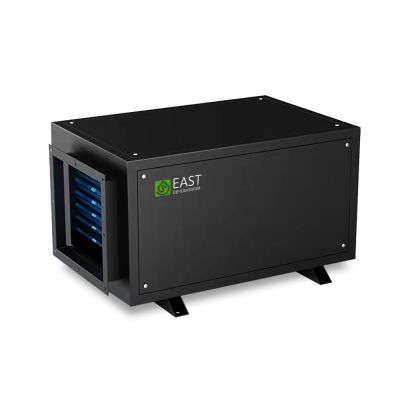
A single unit integrates the rotor, process fan, regeneration heater and filters in one cabinet, which is why the airflow ceiling is set by the frame rather than by the rotor. Standard industrial units span about 300–3,000 m³/h. Extended rotor frames go further, but once you pass roughly 3,000 m³/h the sensible answer is usually two units in parallel or a two-stage machine.
That ceiling is what decides whether a dry room is a single unit job at all. A 1,200 m³ room at 25 air changes per hour needs 30,000 m³/h, which is an order of magnitude beyond one cabinet. In those cases the single unit becomes the make-up air dryer or a zone machine inside a larger scheme rather than the whole answer, and the sizing exercise shifts to the plant level.
Representative project configuration
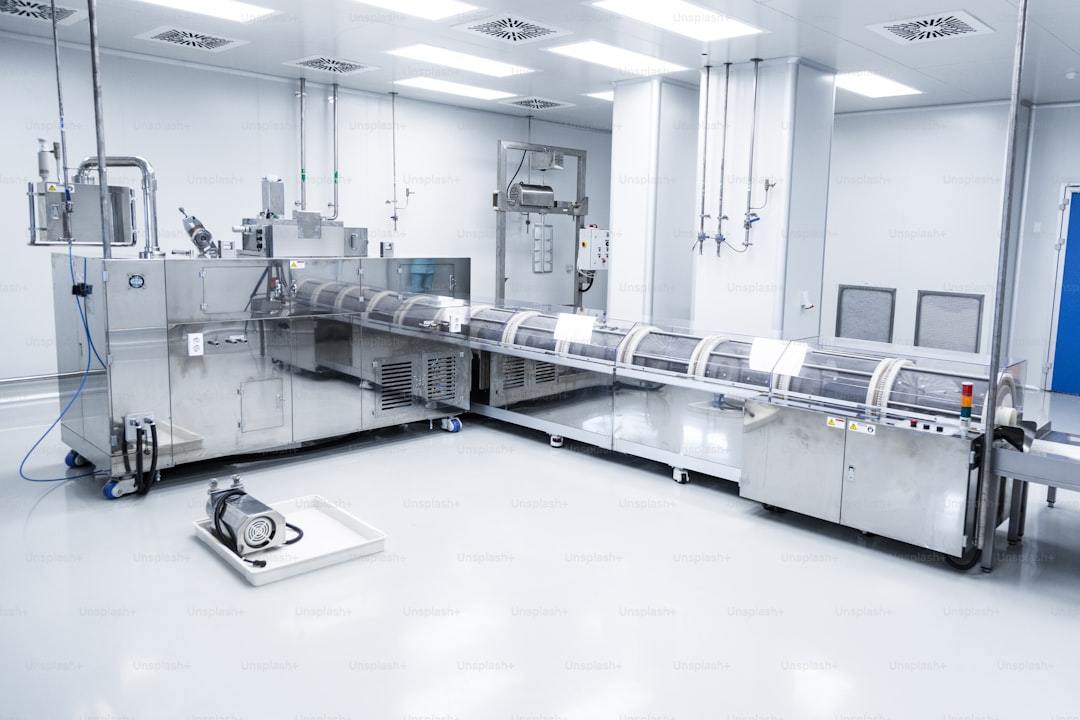
A pilot line needed −40 °C dew point, equivalent to about 0.08 g/kg or under 1% RH at 22 °C, with eight operators crossing an airlock on each shift. Room volume was 1,200 m³ with no outdoor air mixing on a closed circulation loop.
Personnel infiltration accounted for roughly 3 kg/h of the load. The published energy breakdown is worth studying before you sign off: the process fan is about 96 MWh a year, the regeneration heater about 552 MWh, and the regeneration fan about 48 MWh. Adding regeneration heat recovery cut the total to roughly 520 MWh, a 25 percent saving, which is the single largest lever on running cost.
Design inputs and the numbers to use
| Input | Typical value | Notes |
|---|---|---|
| Target dew point | −40 °C standard; −50 to −60 °C advanced | Use dew point, not RH, below about 1% RH |
| Moisture content | 0.08 g/kg standard; 0.02–0.04 g/kg advanced | Directly sets rotor depth and staging |
| Room temperature | 20–25 °C, held ±1 °C | Warmer air carries more moisture into the room |
| Air changes | 20–30 ACH; 30–50 ACH advanced | Multiply by volume for process airflow |
| Personnel load | 50–80 g/h per operator | Multiply by peak occupancy, not average |
| Regeneration temperature | 100–140 °C silica gel; 180–220 °C molecular sieve | Above 140 °C a silica gel rotor is damaged |
A single rotor stage reaches about −20 °C dew point comfortably and −30 to −45 °C with high-capacity media; −40 °C and below generally needs two stages in series, with the first bringing air to roughly −20 °C and the second pushing to −50 °C. East Dehumidifier will tell you plainly when your target sits outside what one stage can hold, because a single unit quoted at −40 °C is usually quoted at a much lower airflow than you actually need.
Related questions
Sizing a dry room?
Send room volume, target dew point, occupancy and door schedule. East Dehumidifier will size from moisture load and tell you honestly whether one stage or two is needed.