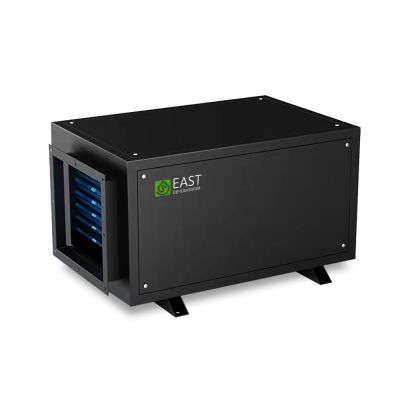
Custom Industrial Dehumidifiers Manufacturer - Delivered in 15 days.

What is an industrial humidifier used for?
An industrial humidifier holds a building at the relative humidity a process needs — most often 40–60% RH, with a tolerance of about ±5%. It is used to suppress static in electronics, stop fibre and paper losing moisture in textile and print, hold weight in cold storage, and keep timber dimensionally stable. Capacity is specified in kg/h of water and is driven by air change rate, not floor area.
The four jobs it does
Static control
Below about 40% RH, charge stops bleeding away through the thin moisture film on surfaces and ESD risk rises sharply. Electronics assembly, printing and film converting all specify their humidity floor for this reason alone.
Material moisture
Textile fibre, paper and board are hygroscopic. Dry air makes fibre brittle and paper curl; holding 50–65% RH keeps breakage and misregistration down.
Product weight
Cold stores run at 85–95% RH because every gram of water evaporated from produce is sold weight lost. Humidification there is a direct margin decision.
Dimensional stability
Timber, composites and hygroscopic powders change size and flow behaviour with moisture. Stable humidity means stable tolerances and consistent dosing.
Choosing the technology
Four mechanisms dominate: steam injection, ultrasonic atomisation, evaporative media and high-pressure atomising nozzles. Steam is sterile and tolerates ordinary potable water but costs roughly 0.7–0.85 kWh per kilogram. Ultrasonic runs at about 0.05–0.10 kWh per kilogram — 85–93% less — but demands reverse-osmosis or demineralised water.
Evaporative media sits in between at roughly 0.10–0.15 kWh per litre and adds useful adiabatic cooling. High-pressure atomising handles very large volumes with 5–10 μm droplets at about 0.18–0.25 kWh per litre, at the price of a pump, an RO plant and quarterly nozzle inspection.
The limits worth knowing
Adding moisture is not free of consequences. Every kilogram has to be evaporated somewhere, and adiabatic humidification takes that heat from the room air, so it cools the space by roughly 0.7 °C per gram of water per kilogram of air. In a heated factory that is a heating cost; in a cold store it is a condensation and frost risk on the evaporator. Over-humidifying is at least as expensive as under-humidifying: condensation, mould and corrosion all follow.
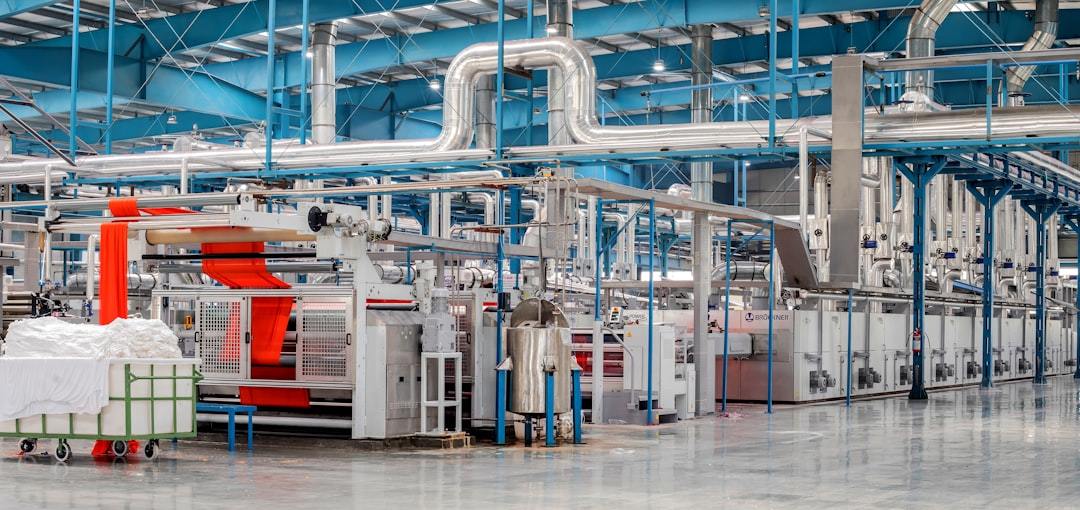
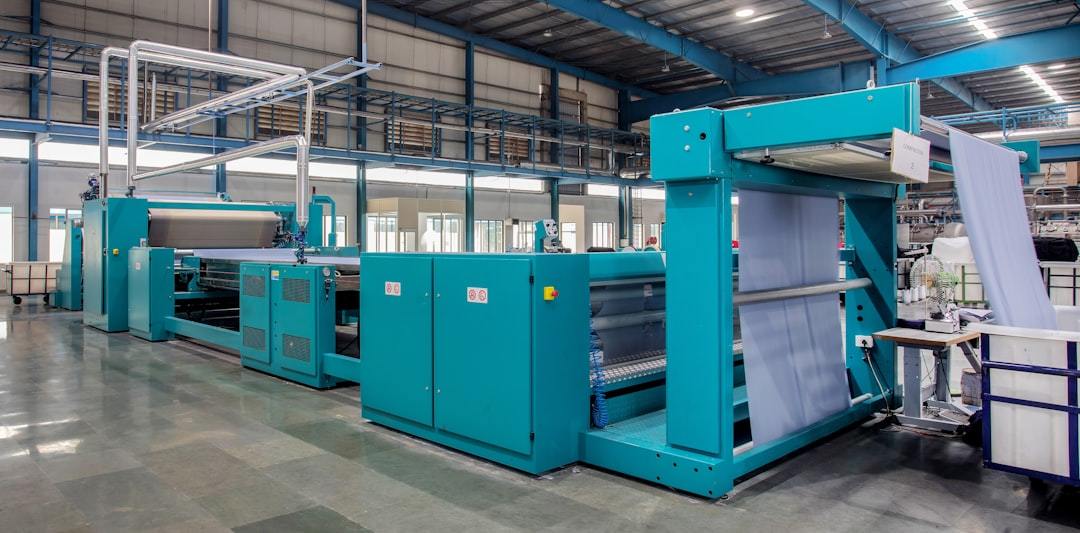
Representative project configuration
A sheet-fed print hall was seeing paper curl and static jams every winter, with the hall dropping to 28–32% RH when the heating ran.
Units were mounted on a grid at 4 m with a 2.5 m clear evaporation distance to the nearest stock, and staged so that only as many run as the load requires. East Dehumidifier specifies the water treatment as part of the machine, not as an optional extra, because hard water turns an ultrasonic unit into a white-dust generator.
Target humidity by industry
| Industry | Target RH | Tolerance | Primary driver |
|---|---|---|---|
| Electronics assembly | 40–60% | ±5% | Electrostatic discharge |
| Semiconductor fabrication | 40–45% | ±2% | Wafer-level static damage |
| Textile spinning and weaving | 55–70% | ±5% | Fibre breakage, fly |
| Printing and paper | 45–55% | ±5% | Curl, static, registration |
| Pharmaceutical production | 45–55% | ±3% | Powder flow, contamination |
| Cold storage, produce | 85–95% | ±5% | Weight loss |
| Timber and furniture | 50–55% | ±5% | Dimensional stability |
| Greenhouse | 60–85% | ±5% | Transpiration, yield |
Design note: the tolerance column is as important as the target. Fluctuation beyond ±5% RH causes dimensional cycling in hygroscopic materials, and tighter bands need faster controls and more capacity headroom.
Related questions
Which humidifier do you need?
Send hall dimensions, air change rate, current and target RH, and water quality. East Dehumidifier will size the duty and specify the water treatment with it.