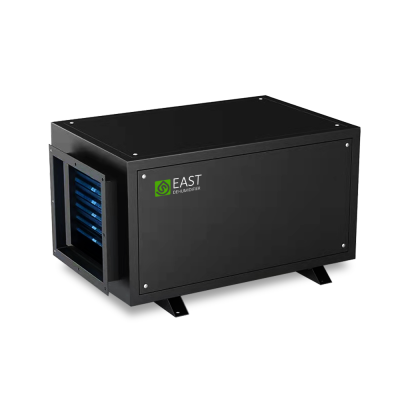
When buyers compare dehumidifiers, the number that usually decides the purchase is the sticker price. It is the easiest number to see — and the hardest one to defend against. But for any dehumidifier that will run for hours every single day, in a warehouse, a production hall, a grow room or a cold-storage facility, the purchase price is only the opening line of a much longer bill.
The U.S. Department of Energy (DOE) reached the same conclusion when it studied dehumidifier economics: over the useful life of the machine, electricity is the single largest cost of ownership. An industrial dehumidifier running around the clock can consume more in electricity in its first year than it cost to buy. This is why “energy efficiency” is not a marketing phrase — it is the difference between a machine that pays for itself and one that quietly drains your operating budget.
The short answer
Energy efficiency matters because electricity, not the purchase price, is the biggest cost of owning a dehumidifier. For a unit that runs continuously, even a modest efficiency gap compounds into thousands of dollars of extra electricity over the machine’s life. A higher-efficiency unit usually recovers its price premium in well under a year, then keeps saving for a decade or more.
The Real Price Tag: Upfront Cost vs. Lifetime Energy Cost
The true cost of a dehumidifier has four parts: the purchase price, the electricity it consumes, the maintenance it needs, and the downtime or stock losses it causes when it under-performs or fails. Buyers who compare only the first part are making a decision with roughly a quarter of the information.
DOE’s life-cycle cost analysis assumes a portable dehumidifier lasts about 11 years and a whole-home unit about 19 years. Across that lifespan, the electricity bill — not the invoice paid at checkout — defines whether the machine was genuinely cheap or expensive. A commercial unit drawing 700 W and running 24/7 consumes about 6,130 kWh a year. At a modest US$0.13/kWh, that is roughly US$797 per year — and more than US$7,900 over ten years, several times the price of even a premium machine. A unit that is just 20% more efficient removes the same moisture for about US$1,600 less over the same decade.
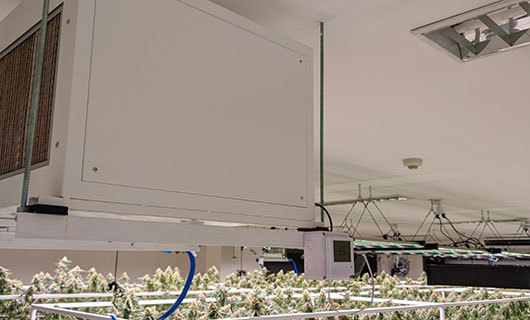
Continuous 24/7 operation in an industrial space turns energy efficiency into the dominant cost driver.
How Dehumidifier Efficiency Is Actually Measured
Efficiency is not a vague “green” label — it is a precise, testable number. The most important metric today is the Integrated Energy Factor (IEF), measured in liters of water removed per kilowatt-hour (L/kWh). Higher is better.
The IEF replaced the older energy factor (EF) because it is more honest: it counts the electricity used not only while the compressor is actively dehumidifying, but also during standby, fan-only and defrost periods. A machine with a great compressor but a wasteful fan will score lower on IEF than it did on EF. Two other figures matter in industrial settings: SMER (Specific Moisture Extraction Rate, in L/kWh under GB 21455-2019) and COP (coefficient of performance). COP peaks around 2.0–3.0 in warm, humid air but can collapse toward 1.0 in cool, dry conditions — a key reason to judge efficiency at your real operating temperature, not at a lab’s ideal conditions.
| Metric | What it measures | Typical “good” value |
|---|
| IEF (L/kWh) | Moisture removed per kWh, including standby & defrost | ≥3.0 for large units |
| SMER (L/kWh) | Moisture removed per kWh at standard conditions | ≥1.8 (Grade 1) |
| COP | Dehumidification output vs. electrical input | 2.0–3.0 (warm/humid) |
| Real-world L/kWh | Industrial refrigerant units in service | 3.5–5.0 typical, >5.5 excellent |
The Standards and Certifications You Can Trust
Because efficiency claims are easy to inflate, regulators and certification bodies publish hard minimums. In the United States, DOE set federal minimum IEF levels that took effect on June 13, 2019. The voluntary ENERGY STAR program then raised the bar further — a certified unit must clear thresholds well above the legal minimum, with version 5.0 in force since October 2019.
| Category | DOE minimum IEF (L/kWh) | ENERGY STAR V5.0 (L/kWh) |
|---|
| Portable ≤25 pints/day | 1.30 | 1.57 |
| Portable 25–50 pints/day | 1.60 | 1.80 |
| Portable ≥50 pints/day | 2.80 | 3.30 |
| Whole-home ≤8 ft³ | 1.77 | 2.09 |
| Whole-home >8 ft³ | 2.41 | 3.30 |
These thresholds apply to consumer-style units; large industrial dehumidifiers are engineered to far higher real-world performance. The discipline is what matters: always ask for a tested efficiency figure under conditions that match your site, and favor third-party-verified ratings over a seller’s marketing copy.
Where Dehumidifiers Quietly Lose Efficiency
Two identical-looking machines can have very different running costs, because efficiency is highly sensitive to operating conditions. The three most common silent losses are:
Temperature mismatch. Most ratings assume around 30°C and 80% RH. In a grow room or cool warehouse sitting near 26°C, the same machine condenses less moisture per kWh — and some units drop off sharply in this zone.
Frost and defrost. When the evaporator runs too cold, ice forms and the unit must stop dehumidifying to defrost, burning electricity while removing no water.
Short-cycling. An oversized unit hits the target humidity too fast, shuts down, then restarts repeatedly. Every restart draws surge current, and the machine spends more time ramping than dehumidifying.
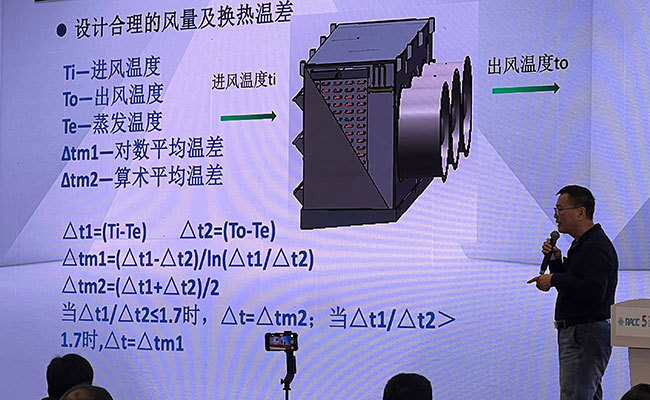
Energy is the silent line item: matching the unit to real site conditions prevents wasted kilowatt-hours.
Why Component Design Determines Long-Term Cost
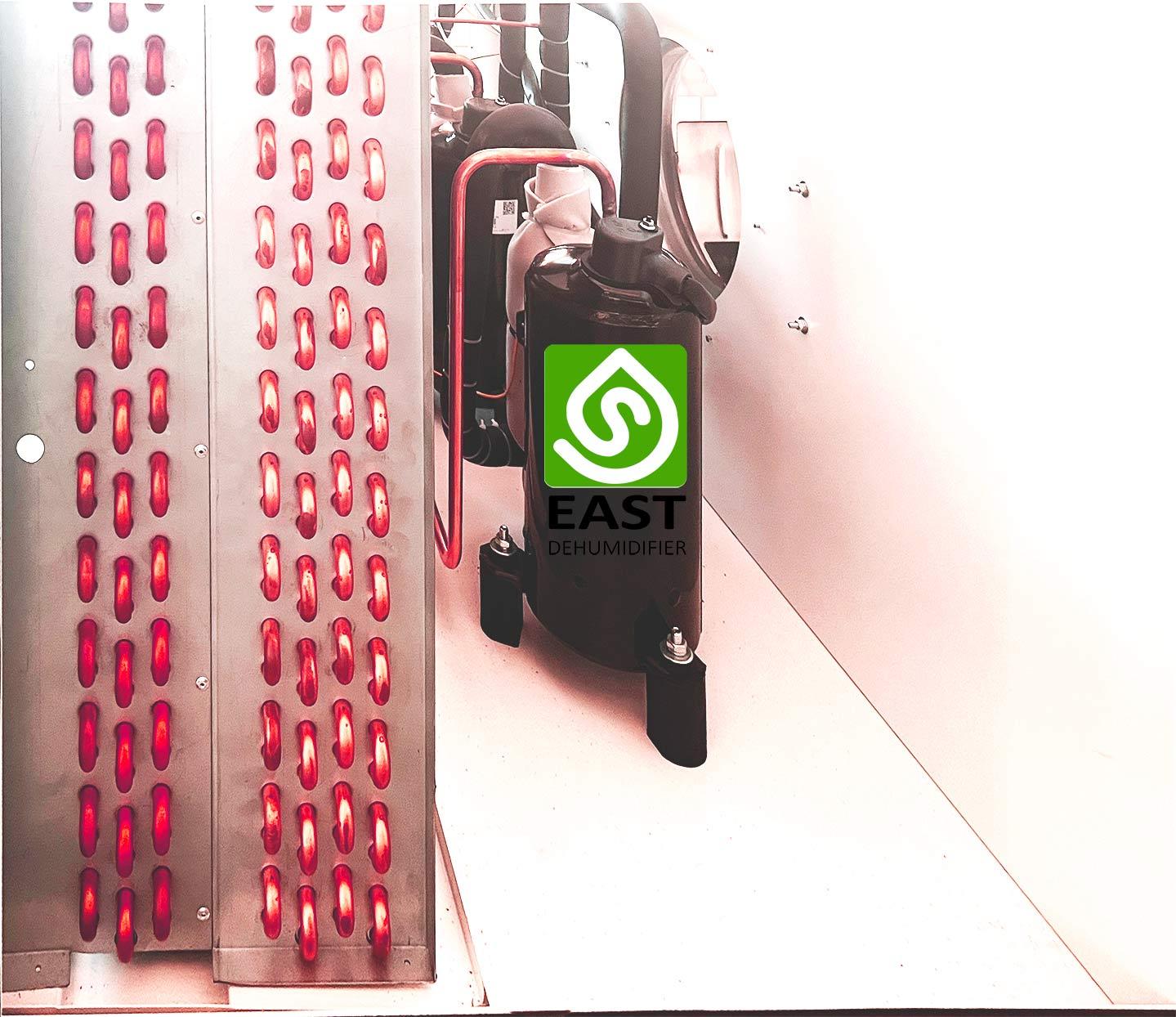
Efficiency is engineered in the cabinet, not promised in a brochure.
Efficiency is engineered, not promised. The components inside the cabinet decide how much water you get per kilowatt-hour, year after year:
Heat exchanger size. A larger exchanger — some cultivation-grade units use exchangers up to 1.5× the standard size — spreads the same cooling duty across more surface, so the compressor works less for the same result.
Evaporator and condenser area. More evaporator surface means more condensation; more condenser surface means better heat rejection and a lower compressor load.
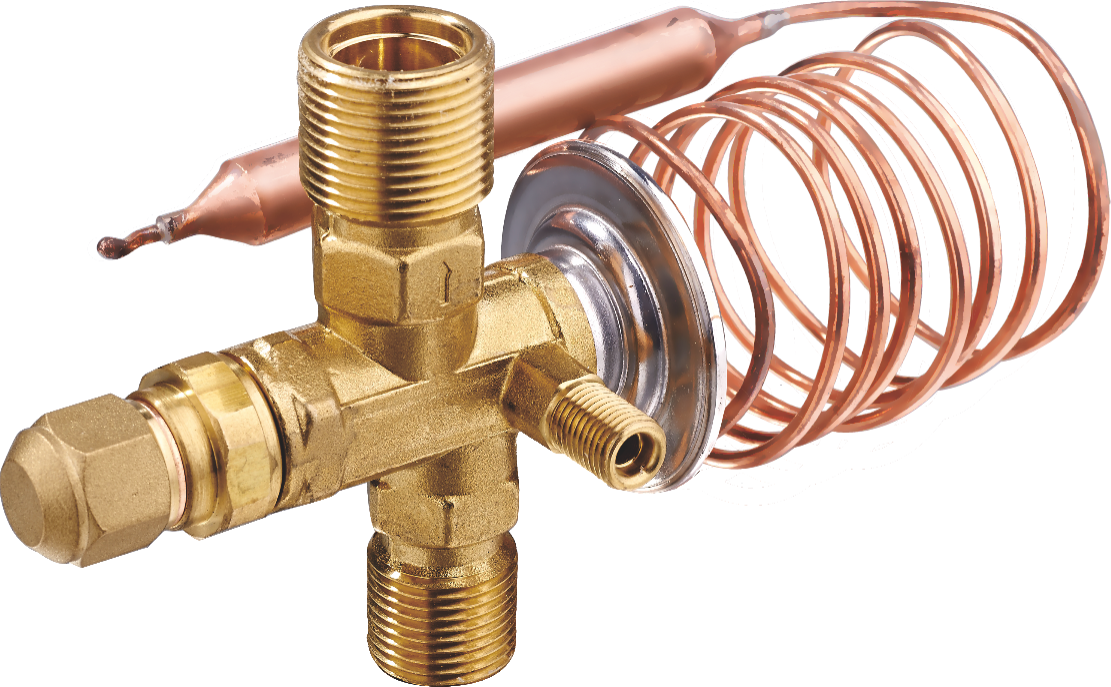
Expansion valve vs. capillary tube. A dedicated thermostatic expansion valve regulates evaporator temperature precisely for condensation, while the capillary tubes used in many budget units throttle crudely and waste efficiency.
Fan and motor type. Electronically commutated (EC) fans and variable-speed compressors match output to demand instead of running flat-out.
How to Calculate Your Real Running Cost
Working out your running cost needs one formula and a few honest inputs: kWh per day = (watts ÷ 1,000) × hours run × number of units, then multiply by your electricity rate. The table below shows a full year of 24/7 operation at US$0.13/kWh.
| Scenario | Power | kWh/day | kWh/year | Annual cost @$0.13 |
|---|
| Small 30-pint unit | 300 W | 7.2 | 2,628 | ~US$342 |
| Mid 70-pint unit | 700 W | 16.8 | 6,132 | ~US$797 |
| Larger industrial unit | 1,500 W | 36.0 | 13,140 | ~US$1,708 |
At commercial rates — where demand charges are added on top of consumption — the gap grows further. A 20% efficiency difference between two otherwise equal units is worth hundreds of dollars per year per machine, and most facilities run more than one.
Energy Efficiency in Cultivation and Controlled Environments
In controlled environments the stakes are highest, because the dehumidifier is not optional and it does not stop. In a typical grow room, HVAC equipment — air conditioning plus dehumidification — is the second-largest electricity load after lighting, commonly 20–35% of the total. While lights cycle on a schedule, humidity control often runs around the clock.
This is exactly where the 26°C-versus-30°C gap bites. A standard ceiling unit optimized for 30°C will still remove some moisture at 26°C, but its efficiency drops and frost can build on the coil. A dehumidifier engineered for cultivation temperatures holds a flatter efficiency curve, which translates directly into a lower monthly bill across the entire flowering cycle.
In climate-controlled facilities, the dehumidifier’s efficiency curve decides the monthly operating bill.
How to Choose an Energy-Efficient Dehumidifier
- 1
Match the rating to your site. Ask for efficiency figures at your actual temperature and RH, not just the 30°C rating.
- 2
Ask for tested IEF, SMER or COP — not just wattage — from a third-party-verified source.
- 3
Inspect the components. Look for exchanger size, a thermostatic expansion valve, and an EC fan.
- 4
Right-size to the load to avoid frost buildup and short-cycling.
- 5
Calculate ten-year TCO, not just the purchase price, before you decide.
Frequently Asked Questions
Does a higher IEF always mean a lower electricity bill?
Generally yes, but verify the figure at your operating temperature. A high lab-rated IEF can fall sharply in a cool grow room or cold store, so ask for a performance curve across temperatures.
How quickly does an efficient dehumidifier pay back its price premium?
For continuous-duty machines, often in under a year. DOE’s analysis of portable units found simple payback periods well below one year; industrial units with higher run hours typically recover the premium even faster.
Are ENERGY STAR ratings enough for industrial use?
They are a useful floor, but industrial units should also be judged on real-world L/kWh at your site conditions, plus component quality and the manufacturer’s performance curves.
Why does my dehumidifier use more power in a cooler room?
Cooler air holds less moisture, so less water condenses per kilowatt-hour, and the machine runs longer to hit the target. Defrost cycles add further non-productive energy use in low temperatures.
Choose on lifetime cost, not checkout price
Picking a dehumidifier on sticker price alone means paying for the difference on every electricity bill for the next decade. Match the machine’s efficiency to your real operating conditions, verify the numbers, and let the lifetime cost drive the decision. Explore our industrial dehumidifiers, browse more technical guides, or send an inquiry and our engineers will help you size and cost the right unit.