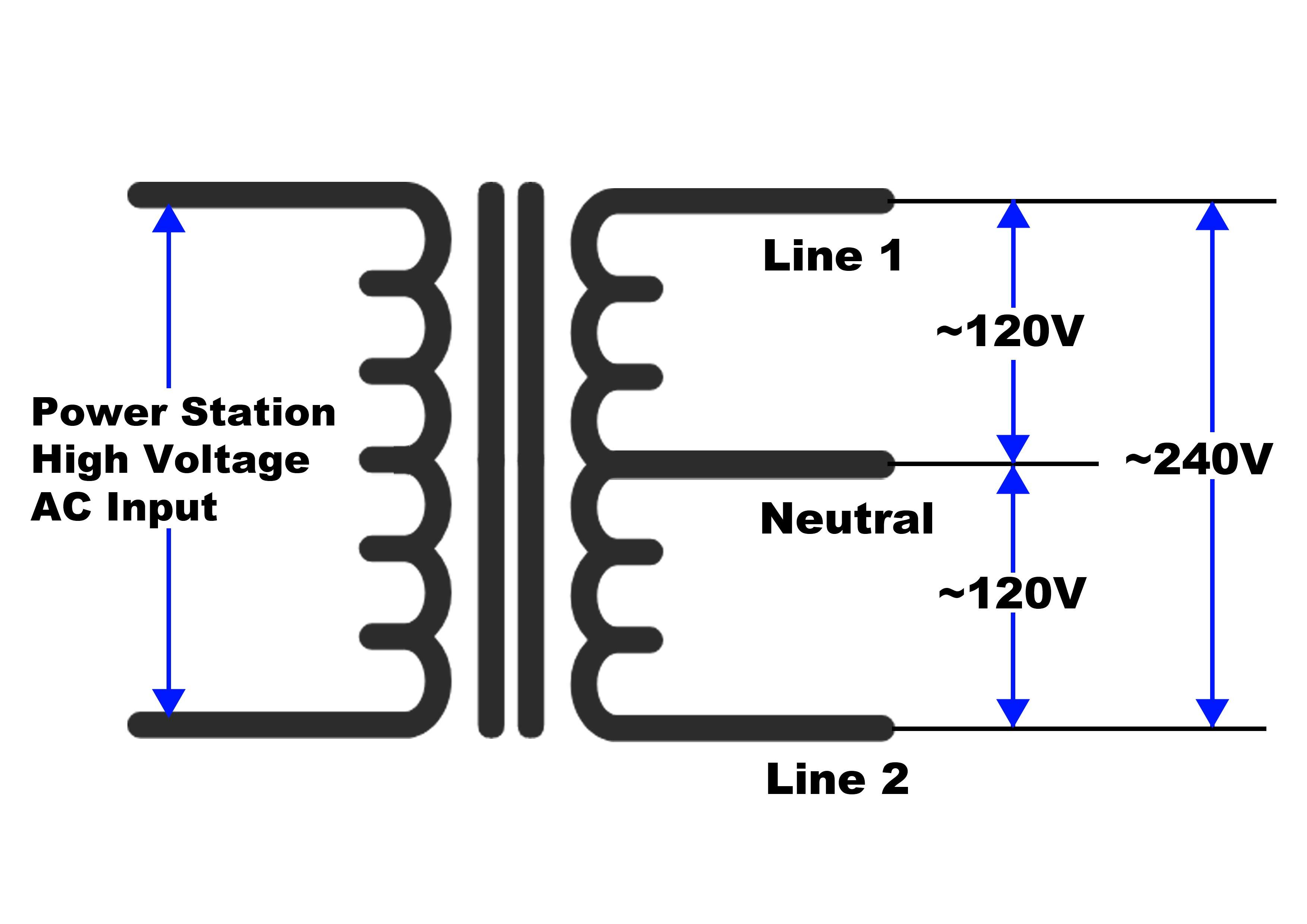
Buying a dehumidifier in North America looks straightforward until you reach the electrical specifications. The region does not run on the 220–240V / 50Hz standard that dominates Europe and Asia. Instead, homes are fed by a 120V/240V split-phase system at 60Hz, while commercial and industrial buildings commonly use 208V/120V or 277/480V three-phase services. Order a machine with the wrong voltage, phase, or frequency and you risk damaging it on first power-up, tripping protection devices, or ending up with a unit that quietly under-performs.
This guide breaks down the North American voltage standards that matter for dehumidifier selection, how to match a unit to your supply, and the exact checks our engineers run before any EAST dehumidifier ships to the United States, Canada, or Mexico.
Quick Answer
Remember three numbers when buying for North America: 120V, 240V, and 60Hz. Portable and mid-size dehumidifiers run on 120V single-phase; larger residential and light-commercial machines use 240V single-phase; and industrial models such as our SDI-480L run on 480V/60Hz three-phase. Frequency is fixed at 60Hz across the region and cannot be changed with a simple transformer.
North America's Voltage Standard at a Glance
| System Type | Nominal Voltage | ANSI C84.1 Utilization Range | Typical Application |
|---|
| Split-phase, single-phase | 120/240V | 114–126V / 228–252V | Homes, small workshops, light commercial |
| Wye, three-phase | 120/208V | 114–126V / 197–218V | Offices, retail, small HVAC |
| Wye, three-phase | 277/480V | 263–291V / 456–504V | Industrial plants, large dehumidifiers |
| Delta, three-phase (high-leg) | 240V | 228–252V (120V to high-leg is 208V) | Older commercial and industrial sites |
Single-Phase vs Three-Phase Power for Dehumidifiers
The supply your dehumidifier needs is driven by its electrical load, not its size. A dehumidifier is a refrigeration system — compressor, blower, and controls running 8–24 hours a day — and once input climbs past roughly 3 kW, three-phase takes over from single-phase.
The reason is current. For the same real power, a three-phase machine draws far less current per conductor, which means smaller cables, less voltage drop on long runs, and less heat in the panel. The formula is I = P / (√3 × V × PF) for three-phase, versus I = P / (V × PF) for single-phase.
| Parameter | Single-Phase | Three-Phase |
|---|
| Power delivery | Pulsating — drops to zero twice per cycle | Constant — phases offset 120° |
| Current at ~6.7 kW load | ~29 A at 230V | ~11 A per phase at 400V |
| Typical motor efficiency | 75–82% | 88–92% |
| Starting torque | 150–250% (needs a capacitor) | 300–500% (self-starting) |
| Practical power ceiling | Up to ~3 kW per motor | 10 kW and far above |
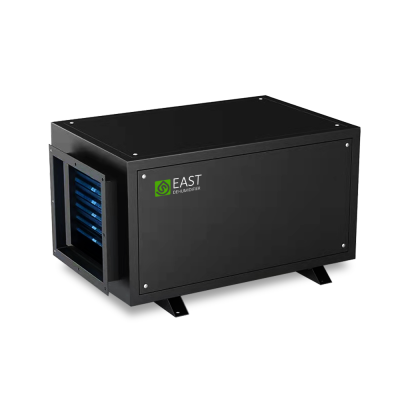
EAST ships SDP-series units as single-phase machines for homes and grow rooms, and SDI-series units as three-phase machines for industrial duty.
Matching Your Dehumidifier to 120V, 240V, and 480V
| EAST Model | Phase | Voltage / Frequency | Capacity | Typical Duty |
|---|
| SDP-58L / SDP-90L | Single | 120V / 60Hz | 58 / 90 L/day | Home, basement, small room |
| SDD-150L / SDD-240L | Single | 240V / 60Hz | 150 / 240 L/day | Grow rooms, large residential |
| SDI-480L | Three | 480V / 60Hz | 480 L/day | Warehouse, plant, storage hall |
| SDI-960L | Three | 480V / 60Hz | 960 L/day | Large industrial facility |
NEMA Plugs and Receptacles: Getting the Outlet Right
| NEMA Config | Voltage / Amps | Wires | Typical Use |
|---|
| 5-15R | 125V / 15A | 2P + ground | Standard household outlet |
| 5-20R | 125V / 20A | 2P + ground | Dedicated 20A circuits |
| 6-20 / 6-30 | 250V / 20–30A | 2 hots + ground | 240V single-phase equipment |
| 14-30 / 14-50 | 125/250V / 30–50A | 2 hots + N + ground | Dryers, ranges, EV charging |
| L6-30 | 250V / 30A | 2 hots + ground | Industrial twist-lock |
Voltage Unbalance: The Hidden 3-Phase Risk
| Voltage Unbalance | NEMA MG-1 Derating Factor | Approx. Usable Power |
|---|
| 0% | 1.00 | 100% of nameplate |
| 1% | 0.98 | 98% of nameplate |
| 2% | 0.94 | 94% of nameplate |
| 3% | 0.89 | 89% of nameplate |
| 4% | 0.82 | 82% of nameplate |
| 5% | 0.76 | 76% of nameplate |
Do not run above 5% unbalance. NEMA MG-1 recommends not operating a polyphase motor when voltage unbalance exceeds 5%. If your site measures high unbalance, correct the phase loading before the machine is commissioned.
50Hz vs 60Hz: Why Frequency Cannot Be Ignored
A common trap is assuming a 220–240V / 50Hz unit will work in North America simply because the voltage is "close." It will not. North America runs at 60Hz, and a transformer can change voltage but never frequency.
Frequency controls motor speed: for a directly connected induction motor, synchronous speed is proportional to frequency. A compressor and fan wound for 50Hz will run about 20% faster on 60Hz, changing refrigerant flow, airflow, and current draw — enough to overload or starve the refrigeration circuit.
The reliable rule is the volts-per-hertz (V/Hz) ratio: a motor is designed around a fixed ratio, roughly 380V/50Hz ≈ 460V/60Hz ≈ 7.6. Match the complete unit to the site frequency — never assume a 50Hz machine works on 60Hz just because the voltage looks close.
A 5-Step Voltage Checklist Before You Buy
1Confirm the site supply. Read the panel label, then measure actual line-to-line (and line-to-neutral) voltage at the equipment location — long cable runs and simultaneous motor starts can drop the real voltage below nominal.
2Fix phase and frequency. Note single- or three-phase, the presence of a neutral, and whether the grid is 50Hz or 60Hz. North America is 60Hz.
3Check the nameplate, not just the marketing power. Use the complete-unit rated current, MCA, and MOCP from the approved data sheet rather than a single compressor RLA.
4Verify breaker and wiring capacity. Make sure the dedicated circuit, conductor size, and overcurrent protection match the manufacturer's listed values and local code.
5Confirm the receptacle or hardwire point. Match the NEMA configuration (or twist-lock / disconnect) so the connection is physically correct and code-compliant.
Frequently Asked Questions
Can I run a 240V dehumidifier on a 208V commercial supply?
It will usually run, but with reduced capacity and higher current draw. A machine rated for 240V on a 120/208V wye service is outside its ideal window. Confirm the model's approved voltage range with the manufacturer before committing.
Is a 50Hz dehumidifier safe to use in North America?
No, unless the complete unit is explicitly dual-rated 50/60Hz. A 50Hz compressor and fan will run too fast on 60Hz, changing refrigerant flow and risking overload. Always match frequency, not just voltage.
Do I need a neutral wire for a three-phase dehumidifier?
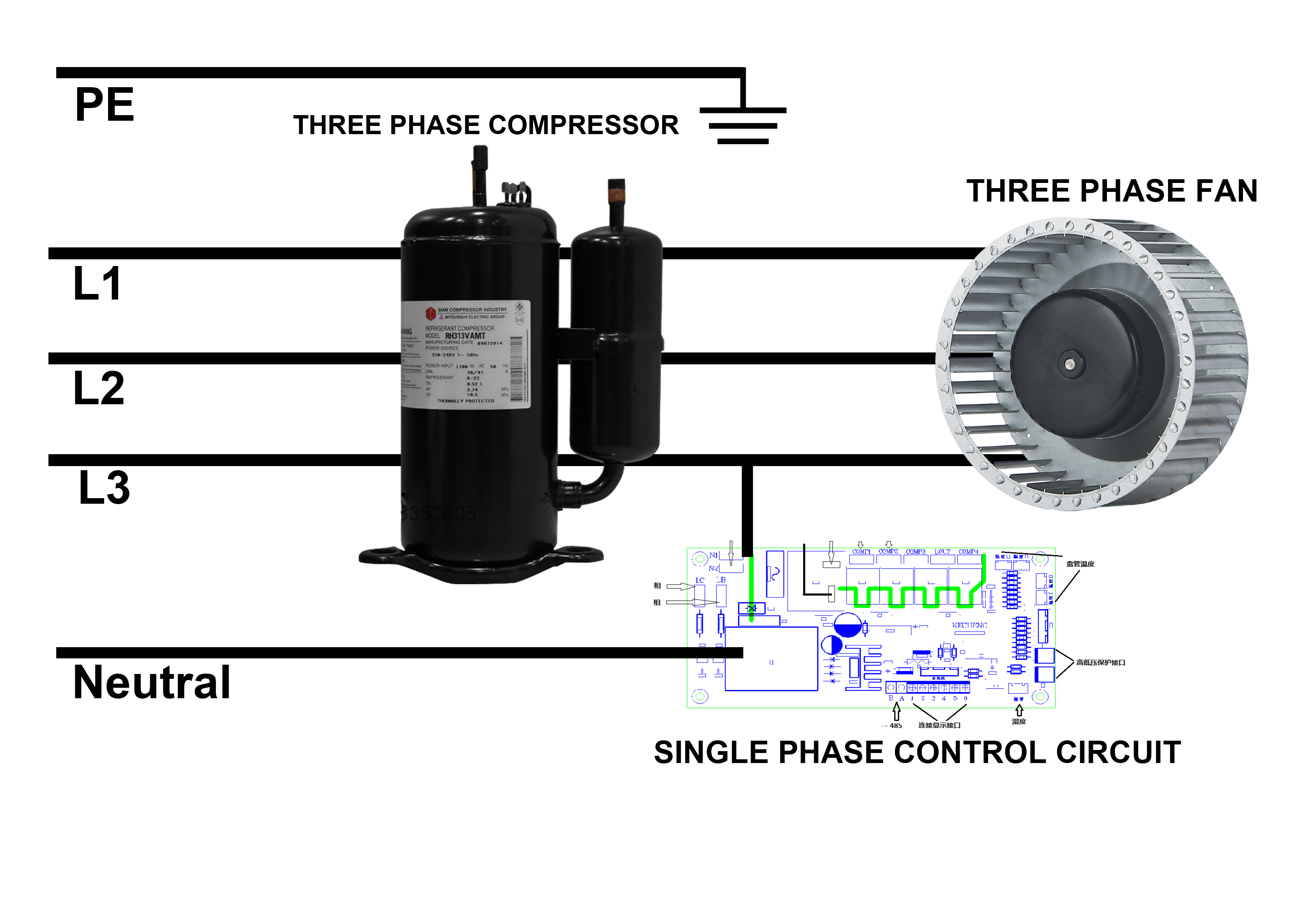
Usually yes. Controls, displays, and protection devices run phase-to-neutral, so a three-phase, five-wire (L1, L2, L3, N, PE) supply is standard. If your site has no neutral, tell us in advance — EAST can build a machine that runs without one.
What happens if voltage unbalance is too high?
Motor windings overheat, efficiency drops, and insulation life shortens. Keep unbalance at or below 1% where possible, and never run above 5% without correcting the phase loading first.
Not sure which voltage your site needs?
Send us your panel details — voltage, phase, frequency, and breaker capacity — and our engineers will recommend the correct EAST dehumidifier and connection method before anything ships.
Confirm Your Voltage