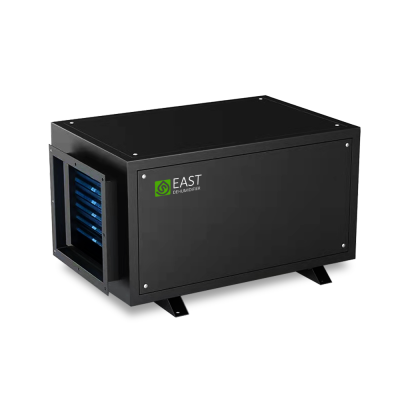
No MOQ Dehumidifier Manufacturing: What It Actually Means for Distributors
For years, the first question a Chinese dehumidifier factory asked was "how many units?" — and the answer had to be 500 or 1,000 before anyone would quote. That wall is coming down. A growing number of OEM/ODM makers now state "MOQ = 1 unit" or "no MOQ" outright. But the phrase hides more than it reveals. This article explains where MOQs come from, the three ways a factory can genuinely offer none, what a single custom unit really costs, and the checklist you should run before you commit.
Exact unit prices swing widely with airflow, dew point, casing, controls and certification. Where a hard, public number does not exist, we use clearly-labelled industry ranges and named supplier statements — nothing here is invented. Sources are listed at the end.
Where MOQ Comes From
A minimum order quantity is not arbitrary — it is how a factory recovers the fixed costs that barely change between building one unit and building one hundred. Understanding the five drivers tells you when "no MOQ" is real and when it is marketing.
Tooling and mold amortization
Custom sheet-metal housings, injection-molded brackets, and rotor cassettes need tooling. A factory amortizes that investment across a production run, so a single unit carries the full per-unit tooling share while a large run spreads it thin. This is the single biggest reason traditional OEM MOQs sit at 1,000–5,000 units.
Component and raw-material minimums
Compressors, heat exchangers, and controllers are often sold by cartons or reels. A one-off order can force the factory to break a pack it cannot easily resell, adding cost.
Production line setup and changeover
Setting up a line for a single machine costs almost as much as for a hundred. Changeover time is fixed regardless of batch size, so small runs carry a heavier overhead per unit.
Batch-based quality control
Incoming inspection, aging tests, and final QA are frequently budgeted per batch. A batch of one still needs the same checks, so QC cost per unit rises.
Freight consolidation
One unit ships LCL (less-than-container load) at a far higher per-kilogram rate than a full container. The MOQ wall is, in part, a shipping-cost wall.
| Cost driver | Why it pushes MOQ up | Effect on a 1-unit order |
|---|---|---|
| Tooling / mold | Amortized over the run | Full per-unit share falls on one unit |
| Components | Suppliers sell in packs | Factory may break a pack |
| Line setup | Changeover is fixed cost | Overhead not spread |
| Quality control | Budgeted per batch | Same checks, one unit |
| Freight | LCL far above FCL rate | Highest per-kg cost |
Five structural cost drivers behind a typical dehumidifier MOQ. "No MOQ" means the factory absorbs these on a single unit — usually via one of the three models below.
Three Ways a Factory Can Offer No MOQ
"No MOQ" is not one thing. There are three distinct mechanisms, and they set very different expectations about customization and price.
1. ODM catalog products with your label
The factory already designed and tooled a certified model. You apply your logo, color, and packaging. Because no new tooling is needed, MOQ can genuinely be 1 unit. This is the backbone of most private-label programs and the fastest route to a branded, sellable product.
2. Modular platform with configurable options
A common chassis accepts voltage, casing, and control variants without retooling. The factory absorbs a single unit inside a flexible cell, so customization stays real while the minimum stays at one.
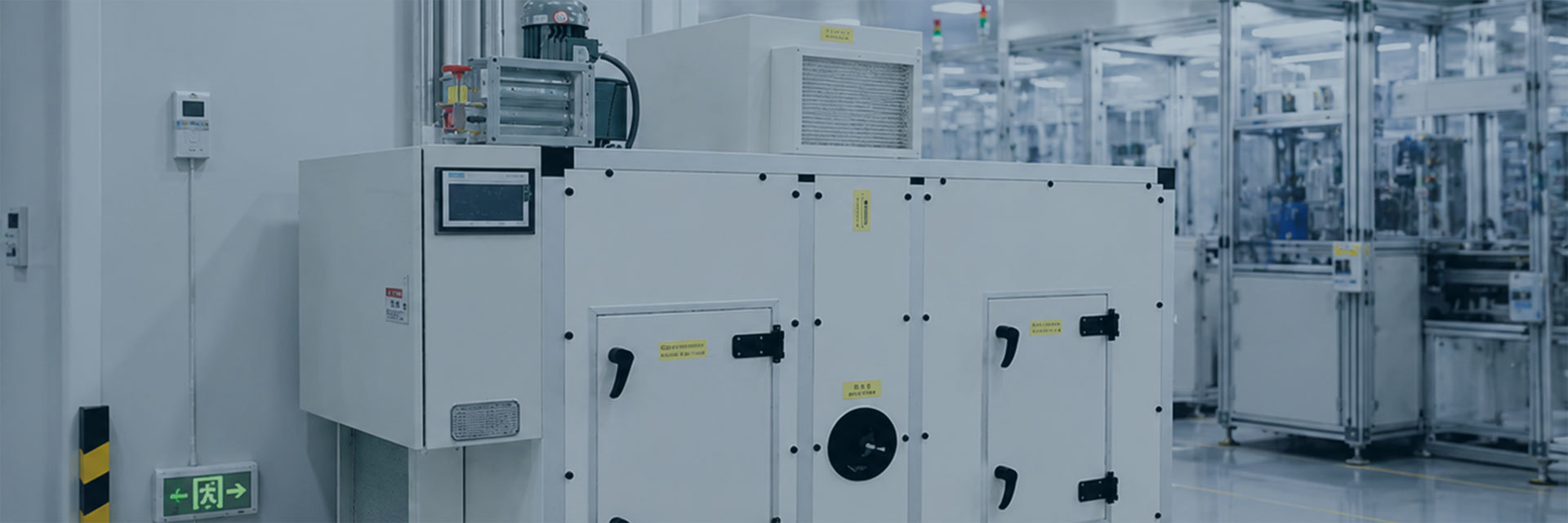
3. Dedicated sample / flex line
Some makers run a cell specifically for prototypes and single custom builds. Public supplier statements back this up: Duokai (Hangzhou) states MOQ = 1 and a 15–25 day build; Rinwang (Shandong) states both in-stock and custom MOQ = 1 unit; Zhejiang Shishuo states MOQ = 1 unit with standard builds in 10–15 days. These are real, traceable commitments — not promises.
| Mechanism | True MOQ | Customization | Best for |
|---|---|---|---|
| ODM catalog + your label | 1 unit | Logo, color, packaging | Fast market entry |
| Modular platform | 1 unit | Voltage, casing, controls | Matched spec, no retool |
| Dedicated sample / flex line | 1 unit | Full custom (with tooling if needed) | Pilot & prototype |
All three mechanisms genuinely support MOQ = 1; they differ in how much you can change and how the factory absorbs the fixed cost.
Established players such as Munters (founded 1955, Sweden; desiccant rotors down to −60°C dew point) and Bry-Air (India; FLi series 2,500–25,000 CMH with Bacnet/Modbus) absolutely build to specification — but their model is project- and volume-based with longer lead times. The no-MOQ, one-unit-trial approach is a Chinese ODM differentiator, not something the European leaders lead on. We mention them plainly because distributors weigh both.
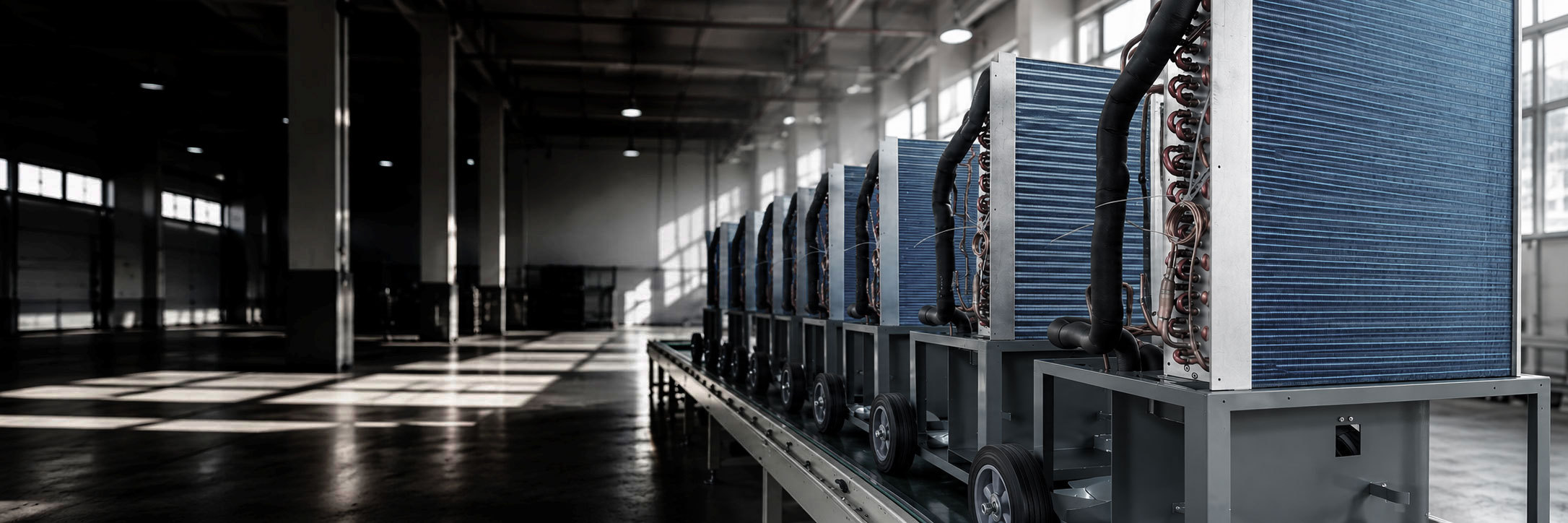
The Real Cost of a One-Unit Custom Build
The honest answer: a single custom unit usually costs more per unit than a volume order, because you forgo volume rebates and may pay a sample-order premium. But you avoid tying up working capital in hundreds of units. Here is the cost anatomy.
| Cost element | 1-unit custom build | 200-unit run | What changes |
|---|---|---|---|
| Tooling / mold | Full share, or none (ODM) | Spread across 200 | Biggest per-unit swing |
| Components | Near list price | Negotiated | Volume discount applies |
| Labor & setup | Not amortized | Amortized | Fixed cost, same total |
| Per-unit QC & docs | Same effort | Same effort | Higher per unit at low volume |
| Packaging | Custom, low economy | Custom, better economy | Minor |
| Freight | LCL (high per kg) | FCL or consolidated | Often the largest single add-on |
Industry-pattern comparison, not a quote. Spec (airflow, dew point, casing, certification) can move the real number by a factor of two or more — always confirm with a project quotation.
Illustration, not a quote: a distributor ordering a single ceiling-mounted unit for a hotel pool room — say 80 L/day, 380V, with their own logo — would typically pay near the factory's standard list price for that platform, plus LCL freight to their port. Order the same unit at 200 pieces and the per-unit price eases as the volume rebate and consolidated freight take hold; the gap is usually in the low-double-digit percent band, not twofold. The decision is rarely about unit price alone — it is about whether you want that capital tied up now or later.
Rule of thumb from contract-manufacturing data: ODM programs carry little or no tooling and shorter timelines (roughly 30–60 days to first shipment) but a slightly higher per-unit cost because factory margin is baked in; strict OEM with new tooling runs $2,000–$50,000+ in tooling and 8–20 weeks. No-MOQ sits at the ODM end — low entry cost, modest per-unit premium, fast start.
Seen over a five-year horizon, the no-MOQ route often wins on total cost of ownership for a distributor still learning the market, because the capital freed from inventory can earn a return elsewhere or absorb a mis-specification that would otherwise scrap a whole container. You pay a little more per unit; you risk far less in total.
Who No-MOQ Fits (and Who It Doesn't)
No-MOQ is a tool, not a universal win. Match it to your situation. If you are already a high-volume buyer, still ask for the volume (MOQ) price and compare the two — no-MOQ's value is flexibility and low capital exposure, not the absolute lowest unit cost. Use it where those traits matter more than a few percent of margin.
| Buyer type | Fit? | Why |
|---|---|---|
| Distributor testing a new market | Strong fit | Validate demand with 1 unit, no inventory risk |
| Specifier / consulting engineer | Strong fit | One matched unit for a pilot or a single room |
| R&D / pilot production line | Strong fit | Prove the spec before scaling |
| Small fixed project (one hall) | Strong fit | Exactly the quantity you need |
| High-volume commodity buyer | Caution | A true MOQ price may beat no-MOQ per unit |
| Brand needing exclusive tooling | Caution | That is OEM, not no-MOQ — budget tooling |
From 1 Unit to 200: A Distributor's Growth Path
No-MOQ is most powerful as a ramp, not a one-off. The pattern we see work repeatedly:
| Stage | Units | Typical lead time | What you gain |
|---|---|---|---|
| 1 · Trial | 1 | 10–30 days | Prove build quality & spec |
| 2 · Market test | 10–20 | 15–30 days | Real field feedback |
| 3 · Stocking | 50–100 | 15–30 days | Shorter own delivery promise |
| 4 · Private label | 200+ | Volume-negotiated | Own packaging & price |
A typical distributor ramp from a single trial unit to a private-label line. Lead times are custom-build ranges cited by suppliers above.
Most distributors we support reach stage 2–3 within their first year, then decide whether a private-label line (stage 4) justifies the tooling and packaging investment. The no-MOQ model lets that decision wait until the market has actually spoken — which is the whole point of starting small.
Stage 1 — Trial (1 unit)
Validate build quality, confirm the specification matches your market, and photograph the unit for your own catalog. Lead time for a custom build is commonly 10–30 days.
Stage 2 — Market test (10–20 units)
List the product, collect field feedback, and tighten requirements before you commit to inventory.
Stage 3 — Stocking (50–100 units)
Carry stock and shorten your own delivery promise to customers — the moment no-MOQ starts paying back.
Stage 4 — Private label line (200+ units)
Negotiate volume pricing, own the packaging, and consider exclusive variants. See our Customized Service page for how a private-label line is scoped.
How No-MOQ Affects Quality Control
The fear every distributor has: "If I order one, do I get the reject?" The reassuring answer is that no-MOQ does not mean lower standards.
Same line, same QC
A single unit runs on the same production line and the same inspection checklist as a volume order. Reputable makers run incoming inspection, functional aging, and final QA on every unit regardless of batch size.
Documentation per unit
Good makers issue a test report per unit — capacity, power draw, dew point, and noise. As one Hangzhou supplier documents, its plant runs 8 QC staff and 2 QC managers across 6 production lines, inspecting material, production, and packing. Ask for that report; it is your proof.
Witness and third-party testing
You can request factory or customer-witnessed testing even on a single unit. For a critical application, specify it in the PO — it costs little and removes doubt.
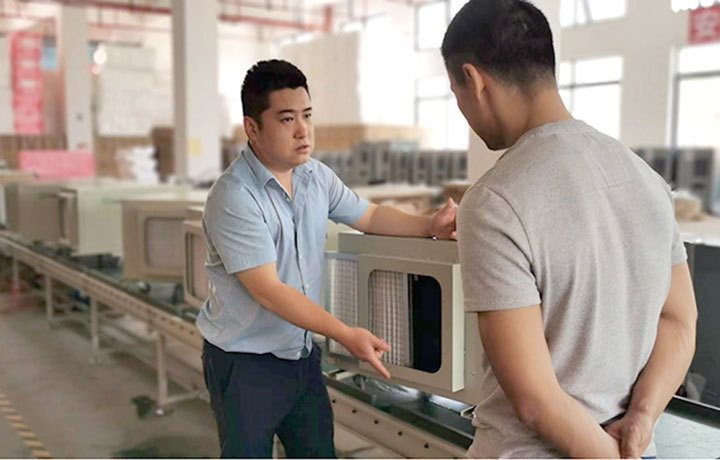
The practical takeaway: ask for the per-unit test report in writing and keep it with the certificate file. A maker that ships a single unit with a full capacity, power, dew-point, and noise log is applying the same discipline it applies to a 200-unit container — and that is the signal you actually want. No-MOQ changes the quantity; it should not change the paper trail.
Checklist Before You Commit
Run this five-point check before you send a deposit. None of it is heavy; all of it prevents the common failures.
- Confirm what is customizable. Casing, voltage (110–480V), logo, packaging, and controls are usually open; structural changes need tooling and move you to OEM.
- Verify certifications for your market. CE for the EU; UL / cUL / CSA for North America; ETL as an alternative; ISO 9001 for the system. Ask for the valid certificate number, not just the logo.
- Clarify the real lead time for 1 unit. Custom builds commonly run 10–30 days; confirm whether that includes the 48-hour full-load test.
- Ask about per-unit pricing and tooling ownership. If you later scale, who owns the mold? Can your variant be locked exclusive? See our Product FAQ.
- Confirm after-sales. Warranty length, spare-parts availability, and remote commissioning. Our Service FAQ covers what to expect.
FAQ
Usually a little — you forgo volume rebates and may pay a sample premium. But you avoid tying up capital in 500+ units and you learn fast. Independent manufacturing guides put ODM per-unit cost slightly above strict OEM at scale, yet no-MOQ lets you test before that scale even exists, so the comparison only bites once you are reordering regularly. For a market test, the trade is almost always worth it.
Label/logo, color, packaging, voltage (110–480V), casing material, and control options. Structural changes require tooling and shift the project to OEM with a real MOQ.
Reputable makers state MOQ = 1 with no hidden minimum. Watch for two real costs: tooling fees on structural changes, and LCL freight on a single shipment. Both are normal, not traps — just price them.
Keep the same spec and factory, ask for volume pricing at roughly 50–100 units, and confirm tooling ownership so your design stays exclusive. The ramp from Stage 1 to Stage 4 above is the proven path.
Ready to spec your first unit? Talk to our engineering team and we will scope a build to your exact application.